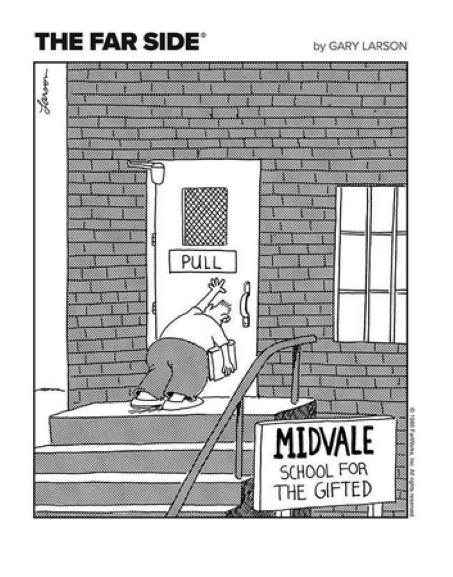
Did you know that focusing on fundamentals can ruin your growth as an artist?
I think it got in my way.
It's something I spend way too much time thinking about.
That might sound wrong, especially if you know me or survived my classes.
Because I believe that the "Fundamentals" are actually really really important.
Topics like Perspective, Anatomy, Measuring, Notan (figure/ground), the Form Principle, the Anatomy of Light, Lines of Action, Structure, Composition, etc. Etc. ETC!
BUT...
Here's the thing...
They only matter if you use them.
In my own studies (an ongoing lifetime process that I love!) I believed for a long time that if, AND ONLY IF, I got "good" at X, Y, or Z thing THEN...
I'd finally get to make the work I dreamed of.
I spent years drawing portraits in my sketchbooks, studying color by plein aire landscape painting, still life painting for textures and materials, following courses on digital sculpting, etc Etc ETC....
And I really believed that by studying these subjects then impactful Creativity would somehow spontaneously emerge from that process of layering skills on top of skills.
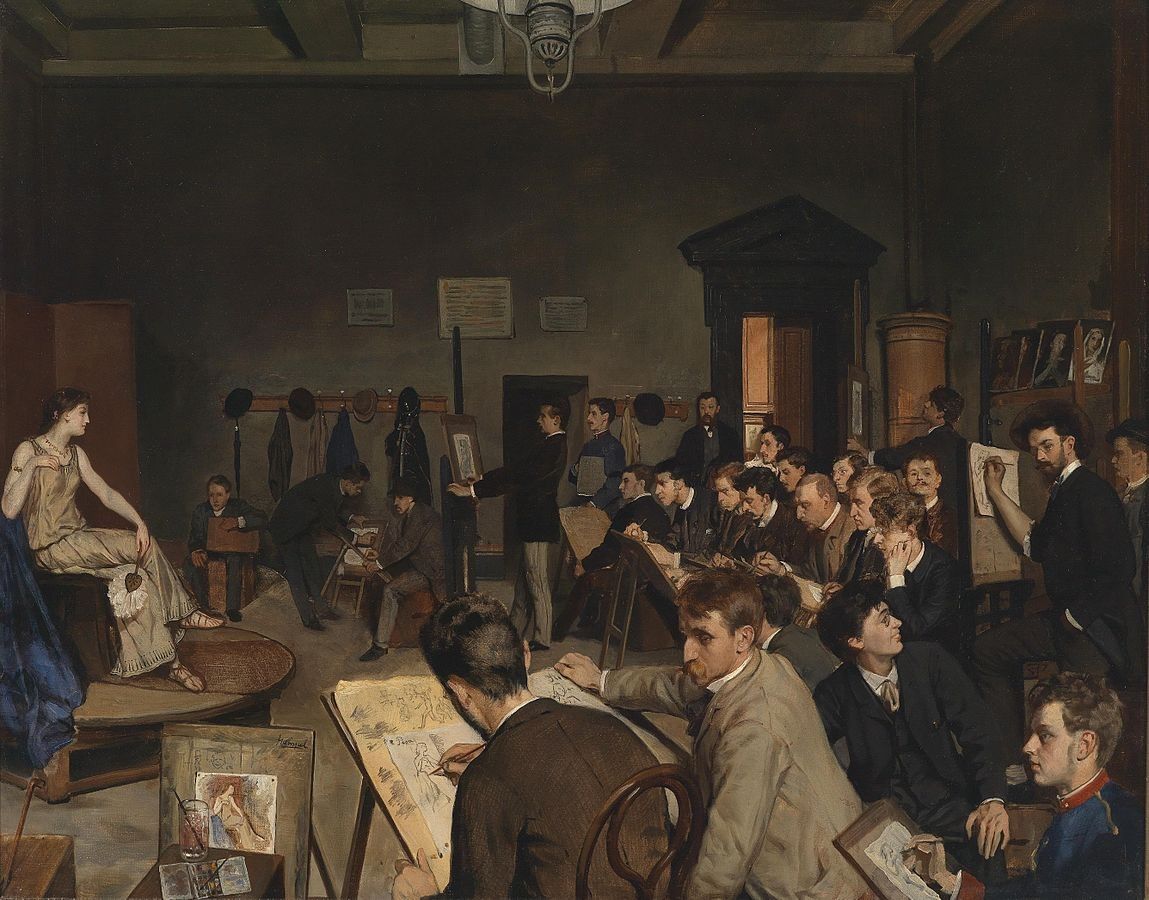
While it IS TRUE that learning and mastering new techniques do inspire new directions in your art.
It can reveal new potential paths that ignorance blinded you to.
BUT in many ways it is a lie that simply "focusing on fundamentals" will somehow make you into an artist.
The absolute best artists that I know didn't wait until they had their fundamentals mastered before they started making the work they dreamed of.
What they do instead is they make the work they want to see.
They tell the story, they care about
They put themselves out there!
AND along the way, they figure out what's missing.
Then they pursue that bit of knowledge while applying it to their work!
That is, the work they want to make is the path for their pursuit of their foundations.
First the work, then the foundations.
No matter the profession. Painter, Illustrator, Concept Artist, etc.
Changing your perception from a passive expansion of your expression to an active one, where you take charge of what it is you want to do will change everything for you!
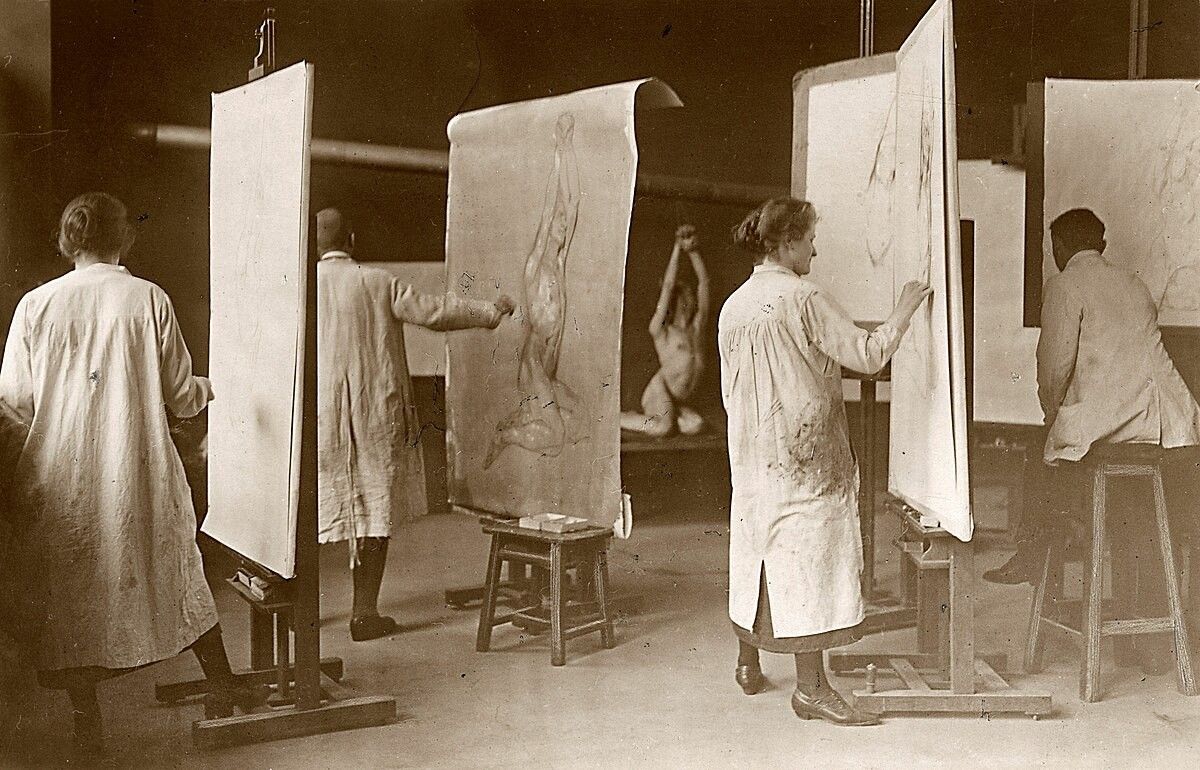
If you believe that anyone holds some secret key to knowledge or technique that will suddenly change what's possible for you...
Then I'm sorry to say...
You'll wait around a long time before you find out that the key to real art that you want to make is already inside of you.
I love studying foundations.
I love figure drawing and perspective and color theory and notan and all the long list of foundations that are important to your development (and mine).
I love them even outside of their practical utility.
But what I found out working with real students in the classroom was that...
A. If the study of anatomy or whatever didn't have immediate usefulness to their class projects or their personal goals, or their major's outcomes IT DID NOT STICK.
B. These Fundamentals did not transfer to future classes or their careers if it did not serve their interests in the NOW.
That changed a lot about how I teach.
My courses now involve "Creative Projects" that are not JUST CAPSTONE events for their studies.
In my live university classroom these are now built around a professional project. A bookcover or magazine illustration presented in the final place on the book or in the magazine with type included.
So they can see how it would actually look.
These aren't tacked on at the end, instead they are ongoing.
I tie some simple short term Foundation Studies (drawing boxes, color studies as an example), but then move as quickly as I can to apply that to the development of the Course Project.
When you're new to a foundational skill or haven't used it much in your work, it can be a challenge to see how it fits.
How the beginning results in the end.
Changing this changed how my students develop.
It is challenging.
It will add folds to your brain.
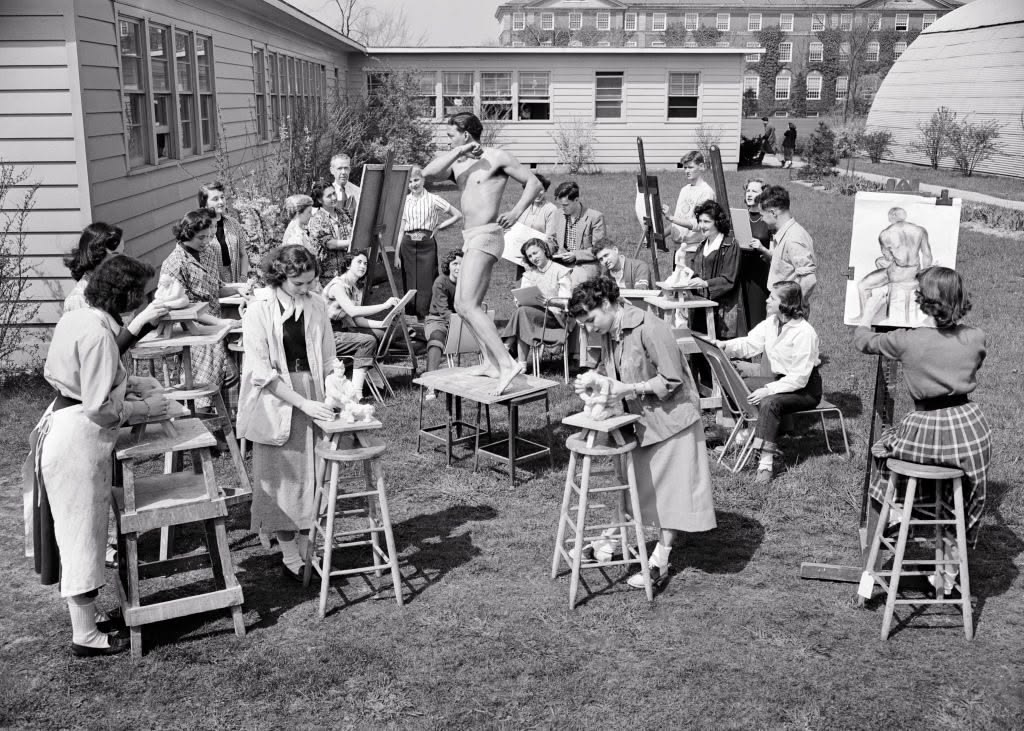
This shift also came from a couple of other people.
Robert Henri and Ilya Repin.
In Robert Henri's book The Art Spirit, he comments,
"Some students possess the school they work in. Others are possessed by the school. It (the school) either uses the students for its own success or the self-educating student uses it for his success."
He has more to say on the subject, for a couple pages. Speaking of the inherent faults and virtues of the available education as it relates to the student. The necessity of living a full life, etc.
But...his point is that your education must be active, not passive. (see Master-Slave Morality...from Nietzsche)
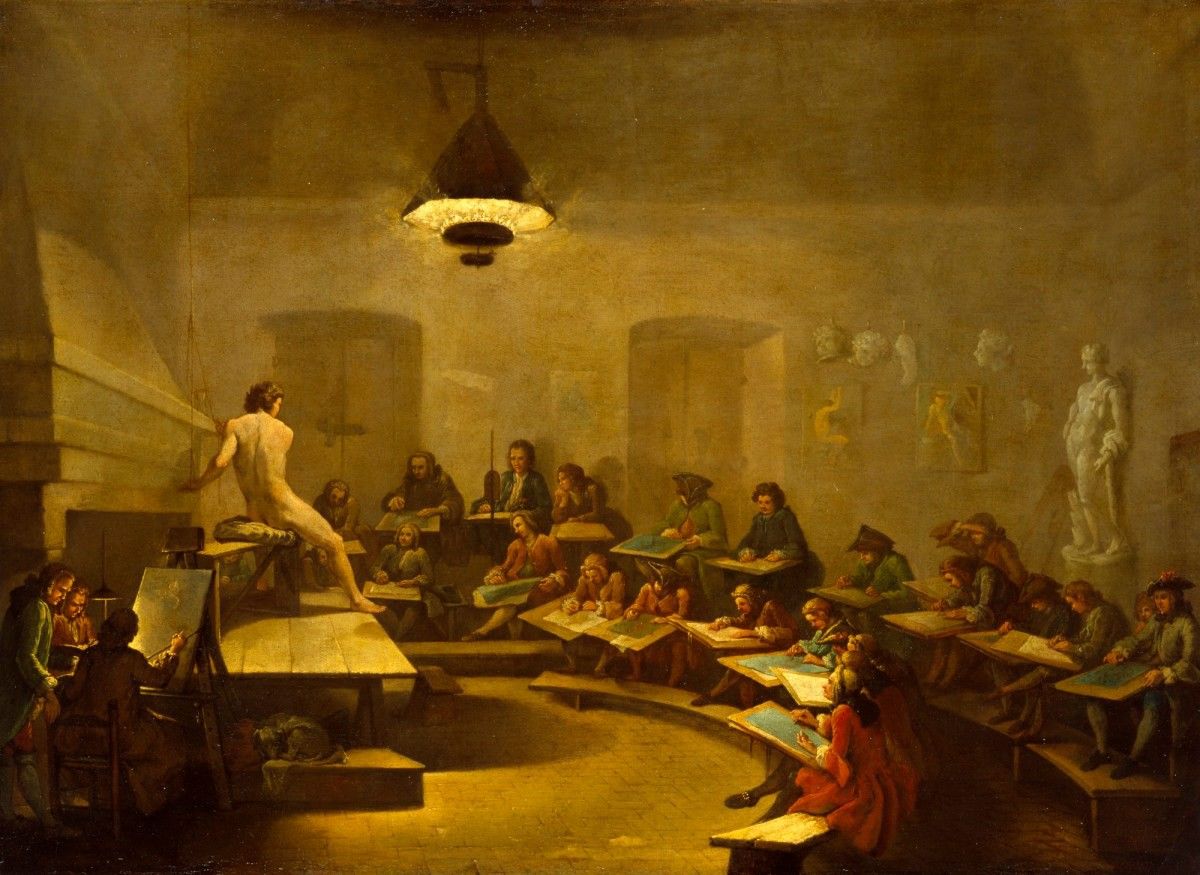
Repin's autobiography Far and Near goes through his experiences in the St. Petersburg Academy of Art (now named after him!).
Among the many art subjects they studied at school, they also studied architecture and history and mathematics and more.
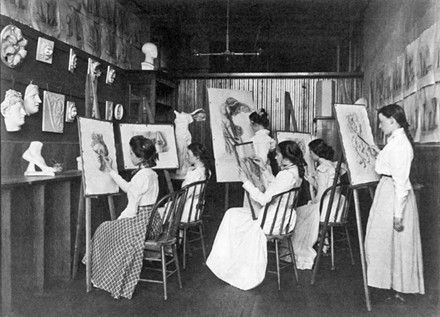
What they did not study is sight-size cast drawing.
(or sight-size anything)
That's a very popular subject at contemporary classical ateliers.
And it has usefulness, BUT in Russia at the time that was ONLY for remedial students at the satellite ateliers where less-skilled students would practice to hopefully one day enter the 6 year academy.
But the thing that struck me the most when he spoke of that time in his life were the weekly competitions (think art challenges).
They would get a prompt for a composition or drawing or painting.
Then at the end of the time period they would submit it for different kinds of prizes.
Art supplies, money, etc.
That was the big focus in the school during the weekly cadence of activities.
It was not...a well articulated and breathlessly executed cast drawing.
That was for those that didn't have talent.
That doesn't mean you shouldn't study Cast Drawing or Sight-Size or any other subject.
Just know that "studying" WILL NOT turn you into an artist.
No subject will.
What can you DO with this knowledge?
How can you avoid the trap? (the one I fell into...)
Well, first of all...
Be CURIOUS!
Look at the work being done professionally.
Look at the work you love.
Collect it.
What nameable skills are these artists great at?
What are their mediums?
Can you find information on their process and techniques?
Create assignments that help you make a similar portfolio.
Then get to work making them.
Your work might be terrible, but FAILING FORWARD is a great strategy!
You don't normally start at the end.
You'll see where you are weak and ignorant.
If that's hard to identify...then...
Seek that knowledge, get a mentor!
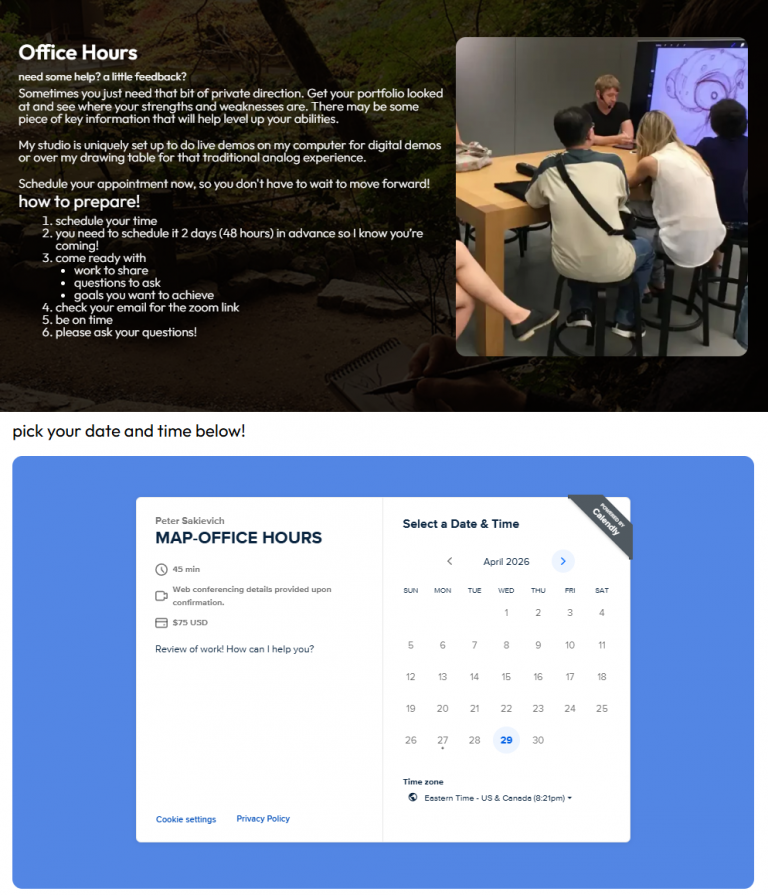
(if you want my help, sign up for one of my office hours!)
Mentors can help you see what you cannot.
If you're looking for deeper fundamentals while making creative work...
Then enroll here, get to work, and join the Discord Community
(links for that are in your account info, the Course Launchpad or on the Free Course page!)
Most importantly, make things that you want to see in the world.
That will show you your path!
Best!
Professor Sakievich